Inside the T20-to-Test batting gap Manjrekar flagged on Doordarshan ahead of India vs Sri Lanka
Sanjay Manjrekar told Doordarshan's The Great Indian Cricket Show on 20 August 2026 that the IPL generation's move into Test cricket is a mystery, and the specific gap he named was batting technique rather than workload. India are mid-series against Sri Lanka.

Sanjay Manjrekar used his appearance on Doordarshan's The Great Indian Cricket Show on Wednesday to name the IPL generation's move into Test cricket as a mystery, and to pinpoint batting technique rather than workload as the part of the format switch the public conversation misses. The remarks land mid-series, with India playing Sri Lanka in a two-Test rubber and a squad that leans on players who came of age in the Indian Premier League.
For anyone tracking the IPL-to-Test pipeline, the timing is clean. The IPL cycle ended in late May. The India versus Sri Lanka Test series began in August. Several names in the current squad were in IPL action less than ninety days ago, and Manjrekar's remarks are aimed at what happens in that ninety-day window to make the Test technique come back on demand. The follow-up coverage at T20 IPL News tracks the rest of the format conversation as the series unfolds.
In this story
- Why the Doordarshan platform shapes the message
- Batting technique, not workload, was the named gap
- Reading the pop-singer-to-classical-raga analogy in plain words
- The Sri Lanka two-Test window that frames the question
- What the IPL pipeline actually changes in a batter's base
- The third-session read on day two that will test the format switch
- Where the format question goes from the press box
Why the Doordarshan platform shapes the message
Doordarshan is India's public broadcaster, and a remark on The Great Indian Cricket Show reaches a different audience than the same remark on a private sports channel. The studio reaches a general sports viewership, the kind of audience that watches Test cricket in pieces, follows the IPL for entertainment, and reads the format question as a public conversation about how Indian cricket is built rather than a niche debate among format specialists. Manjrekar knows that audience. The choice of platform, and the choice of language inside the studio, was deliberate.
The PTI dateline on the report is New Delhi, 20 August 2026. That is the same day India's Test squad is mid-series in Sri Lanka, which gives the remarks a timing the studio did not have to manufacture. Manjrekar is not breaking news here. He is restating, on a national platform, a question he has carried since he retired. The difference between a studio remark on a private sports channel and the same remark on Doordarshan is the audience. A private broadcast reads as commentary. The Doordarshan platform, with the squad mid-series and the IPL cycle just finished, reads as part of the public conversation about how Indian cricket is built.
That matters for the rest of the read. When a former India batter uses the word mystery on the national broadcaster, it sets the language for the next week of press conferences. Captains and head coaches get asked whether they agree. Selectors get asked whether the IPL pipeline produces Test cricketers or simply T20 stars who pass through. The format question moves from studio to press box, and the platform is what makes that move possible. Three days after the broadcast, the format question is already showing up in the press conference cycle for the India squad.
Batting technique, not workload, was the named gap
Manjrekar's claim is narrow, and the narrowness is the part the headlines have flattened. He is not arguing that the IPL makes Test cricket harder for Indian players. He is arguing that the IPL shapes a different batting template, and that the visible fluency of the current generation masks how much of a switch that template requires in real time. The framing word he uses, mystery, is deliberate. It is not failure, and it is not weakness. It is a claim about the public conversation, that the format switch is harder than the highlight reel suggests.
The reason batting rather than bowling or fielding sits at the centre is that batting is the discipline where the format change rewrites the playbook. A fast bowler's workload profile changes between T20 and Test, and the lengths and lines change, but the underlying biomechanics of bowling a good outswinger at 140 kph do not change between formats. A slip fielder's hands do not change. A captain's tactical register shifts, but the underlying vocabulary is shared across formats. Batting is the discipline where the IPL asks for power, intent, hitting gaps and rotating strike against spin in the powerplay, and Test cricket asks for leaving, defending, building an innings session by session, and surviving spells where the ball is moving off the seam in overcast conditions.
Manjrekar is a former India batter with 37 Test caps and 74 ODIs between 1987 and 1996. His voice carries weight on format-transition questions because he played across the late-1980s and 1990s, when the gap between formats was, by design, larger than it is now. He has spent recent years as a studio commentator on this question, and the point of his remarks is not to question the IPL pipeline. It is to question how clean the format switch looks on broadcast.
Reading the pop-singer-to-classical-raga analogy in plain words
Manjrekar compared the T20-to-Test switch to a modern pop singer being asked to perform a classical raga. The analogy does the work that a single adjective cannot, because it treats the format change as a craft question rather than a fitness question. It assumes the difficulty is real even when the public performance does not show it. And it frames the technical base as a vocabulary that has to be re-loaded, not a fitness dial that has to be turned.
Read closely, the analogy points at three specific things. First, the technical vocabulary of a raga is different from the technical vocabulary of a pop hook. Different scales, different ornamentation, different rules about what can follow what. Second, training for one does not automatically produce the other, and a pop singer with a trained ear can still misread the structure of a raga. Third, the audible result of a successful performance can sound effortless even when the underlying work was extensive, and that point maps directly onto the way a T20-trained batter can look fluent in a Test session without the format switch being a simple thing.
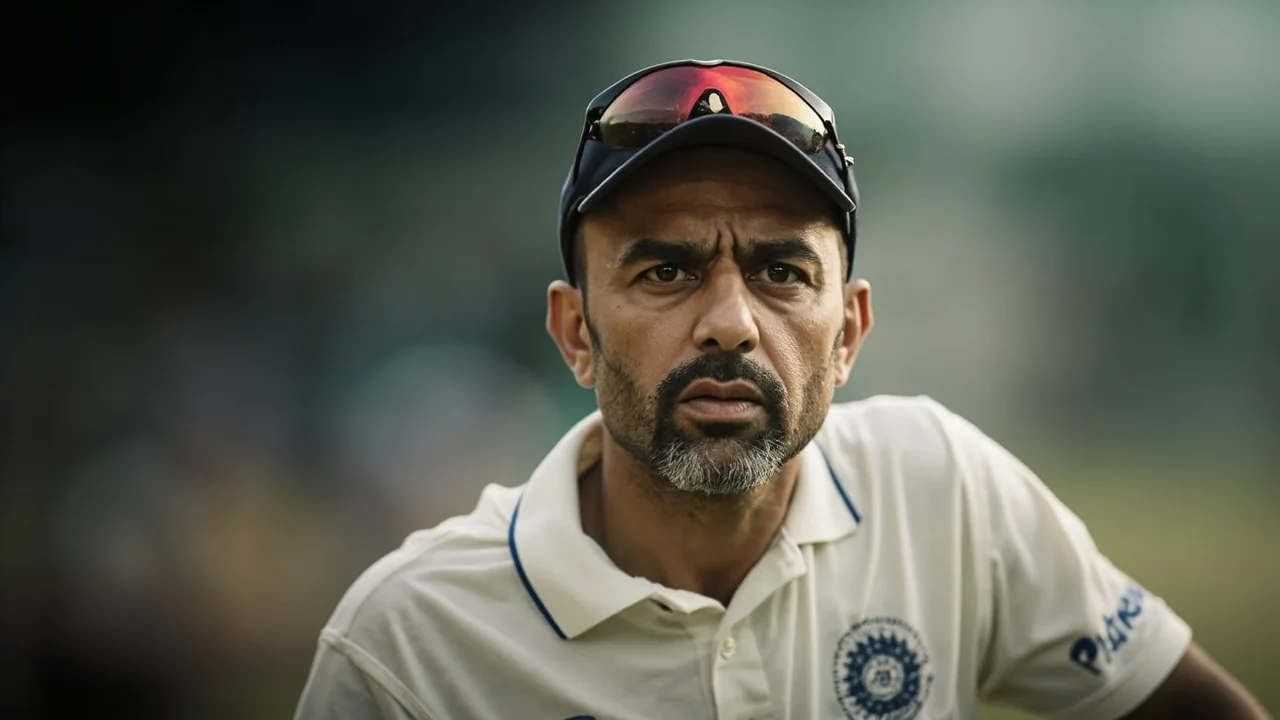
The Test batter's stance has to absorb spells a T20 batter rarely sees. The pop-singer-to-classical-raga analogy treats that rebuild as a craft problem, not a fitness problem.
The analogy does not say the IPL is bad for Test cricket. It says the IPL is a different craft with its own technical vocabulary, and the apparent ease of the format switch is the question, not the answer. For a coach or a selector, that framing is more useful than a generic praise line, because it points at the training window between the IPL and the next Test series as the place where the real work happens.
The Sri Lanka two-Test window that frames the question
India are in the middle of a two-Test series against Sri Lanka, and the squad features several IPL and T20 stars. Manjrekar's remarks do not name individual players. The remarks are about the generation rather than the XI, but the framing places the burden of proof on the format switch in real time. Every Test innings from the current squad is, in his framing, a small test of how clean the format adaptation actually is.
The window between formats is short. The IPL runs from late March to late May. The India versus Sri Lanka Test series runs in August. Several of the names in the current squad were in IPL action in April and May. The time between the end of one format's competitive phase and the start of the other is short enough that the technique the player last executed under pressure is the T20 technique, not the Test technique. Manjrekar's mystery is what happens in that window that lets the Test technique come back so quickly.
The window: IPL ends in late May, India versus Sri Lanka Test series begins in August. Several players in the current Test squad were in IPL action less than ninety days before the first Test. Manjrekar's question is what happens in that ninety-day gap to make the Test technique come back on demand.
For viewers, the simplest watch is the third-session dot-ball count on day two of a Test. A squad that is genuinely converting the T20 base into a Test base will be willing to leave the ball outside off stump for twelve to fifteen balls in a row without a scoring impulse. A squad that is still running on T20 defaults will look for a release shot earlier in the spell. That single stat is the cleanest live read on whether the mystery is being solved or being absorbed back into the format question without an answer.
What the IPL pipeline actually changes in a batter's base
Manjrekar's mystery is partly an artefact of how the current India squad was built. The Indian Premier League has been the dominant formative league for Indian cricketers since 2008, and the cohort currently in the Test squad came of age in an era when the IPL was the headline competition on the calendar, with bilateral T20 internationals and Test cricket sitting alongside it rather than above it. A player who made his first-class debut in 2018 has done most of his high-stakes batting practice in the IPL, in T20I colours, or in the Syed Mushtaq Ali Trophy.
The pipeline works. The current squad includes batters who have scored heavily in Test cricket, and the results against the West Indies, South Africa and England in 2024 and 2025 were the strongest sustained Test record India has posted at home and away in a decade. The mystery is not whether the IPL pipeline produces Test cricketers; it does. The mystery, in Manjrekar's framing, is how quickly the technical base switches when the format asks for a different base, and how invisible that work is to a viewer who watches only the Test highlight.
The technical gap is most visible in the rebuild after an early wicket. A player trained to score from ball one is being asked to leave the first twenty outside off stump, and that rebuild is where the format change shows up.

There is also a quieter point in his remarks. The IPL has shaped the kind of player Indian domestic cricket produces. Batters come through the under-19 system having played a lot of white-ball cricket, and the first-class season is shorter and less central than it was for the cohort Manjrekar played in. The format question, on his reading, is downstream of a deeper structural change in how Indian batters learn the game, and that change started before the current squad's Test caps did.
The third-session read on day two that will test the format switch
The cleanest way to read the next six weeks of Test cricket is to look at three specific innings states rather than at aggregate scores. A top-order batter scoring 60 off 80 balls with the ball turning and a lower-order batter at the other end is, in Manjrekar's framing, doing a different thing from the same player scoring 60 off 45 on a flat track against a tired attack. The headline strike rate treats both innings as comparable. The format-switch read does not.
State one is the rebuild after an early wicket. With a new batter at the other end and the ball still hard, a Test innings asks for twenty to thirty balls of leaving outside off stump before the first scoring shot. The IPL trains the opposite reflex. State two is the long dot-ball stretch against the new ball in overcast conditions, where a fast bowler asks the batter to play or leave for six overs in a row. State three is the fourth-innings chase that goes into the final session, where a target of 150 in 40 overs can become 80 in 18 overs and the batter has to keep the chase alive with singles rather than boundaries.
Each of those three states punishes a T20-shaped technique more than the headline strike rate does. Watching them in isolation is the cleanest read on whether the squad is converting the IPL base into a Test base in real time, or whether the visible fluency in the rest of the innings is doing the masking work the Manjrekar analogy describes. The third-session dot-ball count on day two of a Test is, for a viewer who wants one number to track, the simplest live proxy for how clean the format switch actually is.
Where the format question goes from the press box
Three concrete things will tell you whether Manjrekar's mystery is being addressed or being absorbed into the format conversation without an answer. First, the second Test against Sri Lanka and the specific batting-order choices the team makes, whether the team persists with a top-order that blends IPL stars with traditional red-ball batters, or whether it tilts one way. Second, the post-series press conference in which the head coach or captain is asked about the format question directly. That exchange will tell you whether the team treats the T20-to-Test transition as a working assumption or as a known variable that needs a training window built around it. Third, the squad announcement for the next home Test series, where the selection meeting will be the first place the post-Manjrekar conversation shows up in public form.
The simplest watch is the press conference on the morning of the second Test. If the captain or coach names the format switch as a known variable and points to a specific training window between the IPL cycle and the Test squad, the mystery is being addressed. If the press conference treats the question as one for selectors rather than the squad, the mystery is being absorbed back into the format conversation without an answer. Either answer is information. Both are worth waiting for, and the press box is where the format question now lives.